Introduction: The Cost of Success
A successful production intervention often ends with a collective sigh of relief. The critical database was duplicated, the risky migration completed, and service was restored without impact. The team moves on. The duplicated database, however, does not. It remains, a fully operational and billable ghost, forgotten in the celebration. This scenario is a primary reason why cloud cost optimization fails Series B companies. The processes that enabled rapid growth—manual overrides, temporary resources, individual heroics—become significant financial liabilities as the organization scales. The problem isn’t incompetence; it’s that the definition of “done” for an engineering task rarely includes systematic cleanup, creating a hidden layer of financial debt that native tools struggle to expose.
Technical Debt Becomes Financial Debt
In the early stages, speed is paramount. Infrastructure is often provisioned manually or with simple scripts to solve an immediate problem. A developer needs a test environment, an analyst needs a large instance for a one-off query, or a snapshot is created before a risky deployment. These actions are rational and necessary at the time. The failure occurs when these temporary assets are never decommissioned. As a company grows past 50 employees, tribal knowledge evaporates and asset ownership becomes ambiguous. What was once a single developer’s responsibility is now a shared environment with no clear custodian. This is a common pattern we discuss in our guide on why cloud visibility disappears after 50 employees.
This accumulated cruft isn’t just untidy; it’s an active financial drain. Unattached EBS volumes, unassociated Elastic IPs, and idle RDS instances all incur charges without providing any value. Finding them requires proactive, systematic checks. For instance, a weekly audit for unattached EBS volumes in a specific AWS region is a foundational FinOps task. I run this command every Monday to catch volumes left over from terminated instances from the previous week’s development sprints.
# Find all EBS volumes in the 'available' state (not attached to any instance)
# This is a classic sign of a resource that was not cleaned up after an EC2 instance was terminated.
aws ec2 describe-volumes --region eu-west-1 \
  --filters Name=status,Values=available \
  --query 'Volumes[*].{ID:VolumeId,Size:Size,Created:CreateTime}' \
  --output table
Why Your Cloud Cost Optimization Fails Series B
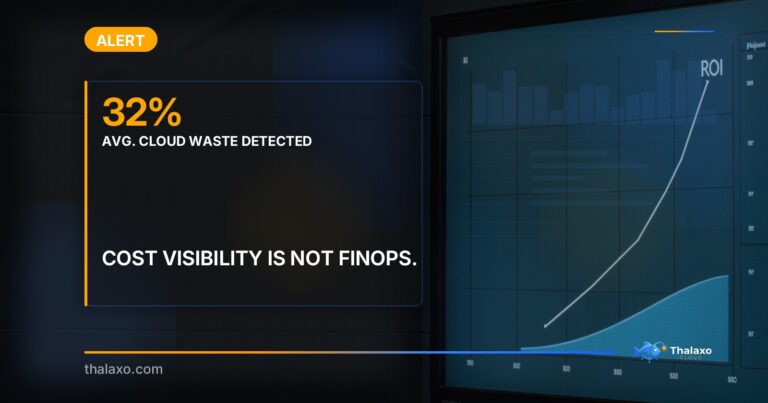
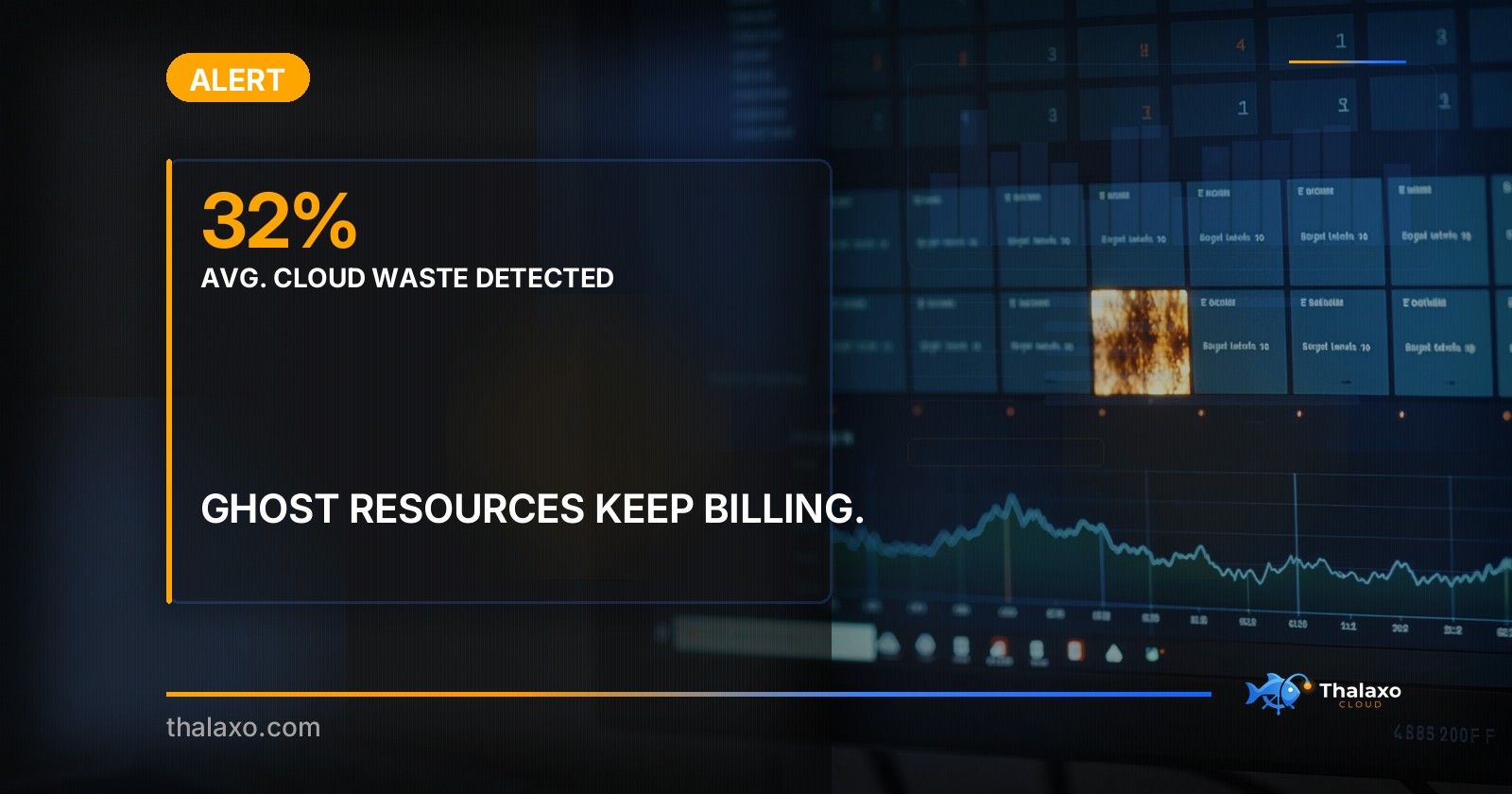
After a Series B funding round, headcount and infrastructure complexity explode. The informal communication channels that worked for a 20-person team break down. A cost anomaly that was once a quick Slack message away from being solved now requires navigating multiple teams and ambiguous ownership. This organizational friction is where manual optimization efforts die. Spreadsheets tracking resource owners become outdated within weeks. Quarterly cleanup initiatives are time-consuming and often miss the long tail of small, forgotten resources that collectively represent significant waste. The FinOps Foundation’s State of FinOps 2024 report identifies an average of 32% of cloud spend as waste, a figure that resonates with the chaos of post-growth-spurt environments.
The problem is compounded in multi-cloud environments, a common reality for scaling companies seeking to avoid vendor lock-in. Native tools are, by design, siloed. AWS Cost Explorer cannot see your GCP projects, and Azure Cost Management is blind to your AWS accounts. This forces teams into a painful, manual reconciliation process that is both error-prone and slow. Identifying an idle resource is only the first step; the real challenge is automating its remediation safely. This is where many initiatives stall. A simple check for idle Cloud SQL instances in GCP, for example, can reveal significant savings opportunities.
# List all Cloud SQL instances and filter for those that are 'RUNNABLE' but have low CPU utilization
# This requires parsing metrics, but a first pass is to check for instances with no active connections.
# The gcloud command itself doesn't directly show idle status, you'd correlate this with monitoring data.
# This command gives you the list to start investigating.
gcloud sql instances list \
  --filter="state=RUNNABLE" \
  --format="table(name,databaseVersion,settings.tier,gceZone)"
The Tooling Mismatch: When Native Tools Are No Longer Enough
Native tools like AWS Cost Explorer are excellent for visibility within a single cloud. They provide detailed breakdowns of spending by service, account, and tags. For a small, AWS-only shop, this is often sufficient. However, as an organization scales, their limitations become liabilities. They are reactive, not proactive. They can show you that your bill is high, but they rarely provide automated, actionable recommendations to fix it without significant manual analysis. For a deeper analysis on this topic, see our guide on when native cloud tools are no longer enough.
Getting raw data for analysis is possible, but it requires expertise. The AWS CLI command to get cost and usage data is powerful but complex, returning a JSON object that needs to be processed to be useful.
# Get the unblended cost for the last 30 days, grouped by service.
# This is the raw data that feeds tools like Cost Explorer. Using it directly requires scripting.
aws ce get-cost-and-usage \
  --time-period Start=$(date -v-30d +%Y-%m-%d),End=$(date +%Y-%m-%d) \
  --granularity MONTHLY \
  --metrics "UnblendedCost" \
  --group-by Type=DIMENSION,Key=SERVICE
This is where dedicated FinOps platforms become essential. They bridge the gap between visibility and action. By integrating with multiple cloud providers, they provide a single pane of glass for all cloud spending. More importantly, they automate the detection and, in some cases, the remediation of waste through rightsizing, idle resource cleanup, and smart scheduling for non-production environments. For details on what Thalaxo supports, see our integrations page and pricing model.
Conclusion: From Reactive Cleanup to Automated Governance
Cloud cost optimization projects fail in scaling companies not because of a single technical mistake, but because of a mismatch between process and scale. The manual, hero-driven efforts of the startup phase cannot survive the complexity of a 100-person engineering organization. The solution is to move from reactive, manual cleanup to proactive, automated governance. This involves implementing tooling that can systematically detect idle waste, recommend correct instance sizes, and schedule non-production resources without requiring a developer to remember a post-deployment checklist. Platforms like Thalaxo are designed for this exact stage, automating the tedious but critical tasks of cloud financial management, allowing engineering teams to focus on building value, not chasing down forgotten databases. For more information, see the official FinOps Foundation for principles on cloud financial management.